Tuesday, December 11, 2007

Comtemporary Jewish Museum in SF

SF Curbed has lots of photos of the inside of the new Contemporary Jewish Museum in SF - it's that tumbling blue box on Yerba Buena Lane. Last time I shot a photo of it, in March of this year, it looked like this:But by September it looked like this (photo from mlinksva's Flickr page):

. . . Which is looking close to the artist's rendering on the JMSF page:They don't open until June 2008, but Jimmy Stamp got an inside tour and posted 14 photos (check 'em out - they may need to provide Dramamine at the door.) This project has been in progress for so long, I thought it was never going to happen, but it's looking good now.

Institutional Art in Oakland

I'm clipping a couple of recent articles from the NYT and from Timothy Buckwalter's blog, about art in Oakland. We also have a new Oakland correspondent, Favianna Rodriquez, who will be checking in soon with news of the current Oakland art scene.

Where ‘Art’ Has Met ‘Craft’ for 100 Years
By CHRISTOPHER HALL
Published: November 11, 2007

WHEN the 1906 San Francisco earthquake destroyed his shop, Frederick Meyer, a German-born cabinetmaker with links to the Arts and Crafts movement, turned disaster into opportunity. The next year he and his wife, Laetitia, opened the School of the California Guild of Arts and Crafts with 3 teachers and 43 students. They had $45 in the bank and a vision of providing rigorous training to fine artists and craftsmen alike.

That school is now the California College of the Arts, a remarkable Bay Area institution that while perhaps unfamiliar outside the region has played an important role in shaping the past 100 years of California art.

“From the beginning the unity of arts and crafts was the most important principle at C.C.A., just like it would be at the Bauhaus, which was established 12 years later,” said Peter Selz, professor emeritus of art history at the University of California, Berkeley. In 1959, while a curator at the Museum of Modern Art in New York, he exhibited two little-known painters with connections to the college, Richard Diebenkorn and Nathan Oliveira.

Both those successful artists are now among the 100 alumni and faculty members whose work is in “Artists of Invention: A Century of C.C.A.,” on view until March 16 at the Oakland Museum of California.
rest of the story here


Final thoughts on the Oakland Museum.
By Timothy Buckwalter
Published: December 5, 2007

Dear Oakland Museum,

Your idea of trying to offer a showcase for California art is ridiculous. Your holdings are seriously lacking in any substantial numbers of recent work from So Cal.

Phil Linhares told me that the Museum will stand by this policy of claiming to show all of California, while in the same breath he said the Museum simply cannot afford to buy any work from these guys. Okay, if you are gonna stick up for a obsolete idea at least think of way around it – why not work on getting some pieces on long term loan? Or, hey, what about prints? As a matter of fact, San Francisco’s Crown Point Press has some Baldessaris available right now.

Here is a better idea, and one that requires much less work. Why not re-mission yourself and become the only Bay Area spot that shows an in-depth selection of 20th Century and 21st Century Bay Area art? There is no competition for the title. SFMOMA doesn’t show local art. Not with any serious commitment, at least. Rene di Rosa only shows the bargains he picked up in the last four decades. Oakland could be a beacon in Northern California of the best and brightest from the place we call home. I’m not talking about hosting a Roy De Forest retrospective. I’m talking about thoughtfully rehanging a vast selection of work that brings to life our proud, brilliant and freakish art heritage. How many schools began here? Let’s name them -- AbEx, Bay Area Figurative, Funk, the Mission School, and so on. Don’t be shy, throw some video and performance in the mix. Geez, SRL is still around and pumping its testosterone. Put one of their pieces outside for the kids to enjoy.

You probably haven’t noticed it, but in the last three years a self-supporting art scene has sprung up in Oakland. I say you probably haven’t noticed because I’m trying to be positive here. If you noticed it and ignored it, wtf Oakland Museum? And like you, it seems the scene is gonna stick around. As a matter of fact a few galleries are even bringing in work from out of town, trying to get a dialogue going with our scene, tossing in some new ideas. Mills has hopped on the bandwagon and promised to import more international and East Coast works into the mix. The Magnes is getting local artists to rummage through their archives to create fantastic shows. What are you doing to support us? (No, a bike tour of Oakland does not count.)
rest of the story here

(Images are from the Oakland Museum, top one via the NYT)

Monday, December 10, 2007

New Bay Area Art Museums in Presidio and Napa

From the SFGate Art Page:

Proposed Presidio museum would be modern addition to historic military site, by John King

Gap founder Donald Fisher has unveiled the design of the museum he wants to build in San Francisco's Presidio - a sedate but glassy modern building bearing little resemblance to the historic military structures that would be its neighbors.

The two-story, 100,000-square-foot structure would occupy the crest of the Parade Ground of the former military base that in 1994 became a national park. It would resemble a long stack of overlapping cubes, with white masonry walls broken by stretches of clear glass to allow views of work inside by artists such as Alexander Calder and Richard Serra.

If the proposal is accepted by Presidio officials, there also would be a network of terraces where sculptures could be displayed - including Serra's monumental "Sequence," a 14-foot-high, 65-foot-long maze of coiled steel that was the centerpiece of his acclaimed career retrospective during the summer at the Museum of Modern Art in New York.
. . . rest of the story here.

- - - - -

Art collector couple builds museum-size cave in Napa for collection, by Carolyne Zinko

San Francisco couple Norah and Norman Stone, already renowned in jet-set circles for their playful personas and modern art collection, created even more of a stir when they unveiled the cave - and a new experiential water and sky sculpture by James Turrell - to the art world and friends at a splashy party over the last weekend of October.

Like other homeowners who outgrow their residences or amass too much stuff, they needed an add-on. In their case, it wasn't a new bedroom attached to their Pacific Heights mansion or their Wine Country farmhouse, but a 5,700-square foot cave in which to display the vast number of oversize works they have purchased through the years. Most are simply too big to display in a home and require a museum-sized space to be seen. And with cost as no deterrent - Norman Stone's father was the late billionaire insurance magnate W. Clement Stone - the sky was literally the limit.

"It's a private gallery," Norman Stone said. "It's not big enough for a museum."

. . . rest of the story here.

(Images from SFGate - top photo by Gluckman Mayner Architects; bottom photo by Drew Altizer)

Sunday, December 9, 2007

Jasper Johns "Gray" at the Chicago Art Institute


I just returned from a short trip to Chicago and luckily had enough time to hit the Art Institute before I left. Their featured show is a Jasper Johns retrospective of his gray paintings on display until January 6, 2008.

This show was fantastic. I never cared much for Johns until I saw this exhibit. It was fascinating to travel from room to room starting at the beginning of his career and ending in 2006. There were rooms full of his flags, targets, maps, numbered pieces, letters, ripped canvases, mixed media pieces, and more (more than 120 works).

I was really taken by the amount of work this man created and the passion that drives him to create. Imagine devoting a lifetime to the study of gray? Johns pushed this color to the limit and did it in such a fascinating way. To visit this show is to be in the presence of genius.

One might think that visiting a show called “Gray” on a cold grey winter day in Chicago is a downer. But in truth, it was the brightest part of my visit.

This exhibit will be at the Metropolitan Museum of Art from February 5 – May 4, 2008

Jasper Johns image from the Chicago Art Institute's Website:

Friday, December 7, 2007

Off The Point

I don't have a car so I seldom get to Hunter's Point Art Studios. So, I was very pleased to see this show on Hayes St, within walking distance of home. The show itself is in a very large (if bare bones) corner space and is full of very nice work. I didn't bring my camera with me so I wasn't able to take any photos; however, there is a nice selection of small images up at their website. The show will be up until December 29th so it's a great place to buy art for people on your Christmas list.

"Off the Point" Holiday group show

A revolving exhibit of work by 35 Hunters Point artists. Featuring Lawrence Ferlinghetti and Joe Sam as well as glass blowers from Public Glass of Bayview.

At Hayes Valley Market, 580 Hayes Street

contact: Zannah Noe, Show organizer
415-822-9378, zannah@velcrow.com
http://www.thepointart.com/holiday_2007/

(Images from "Off the Point" web site, added by Anna L. Conti.)

Tuesday, December 4, 2007

Maria Forde, Veronia De Jesus, & Electric Works

forde_0.jpg

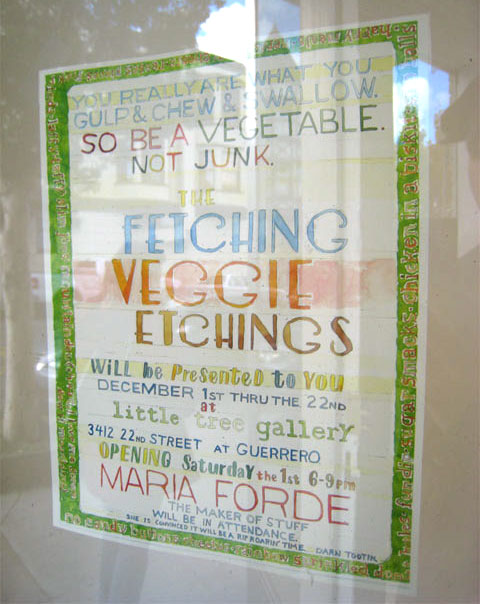
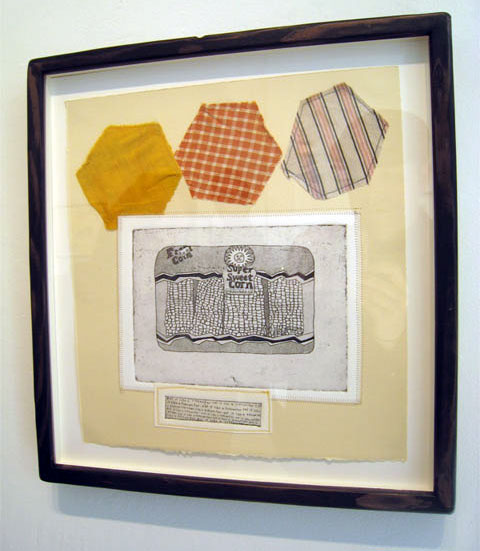
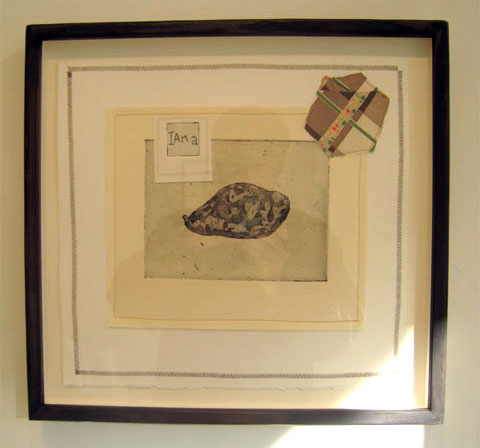
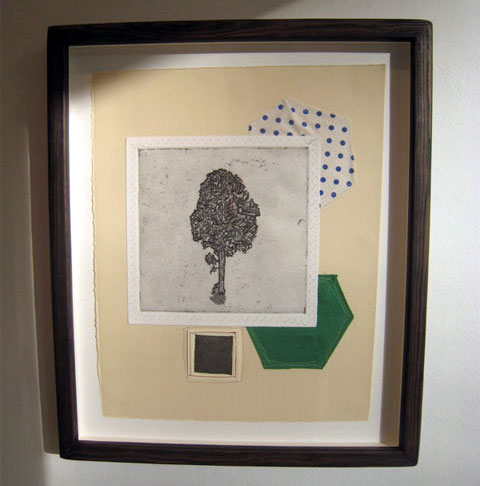
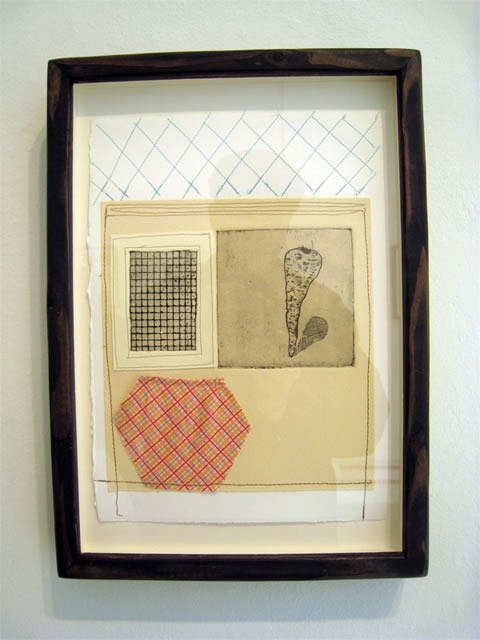
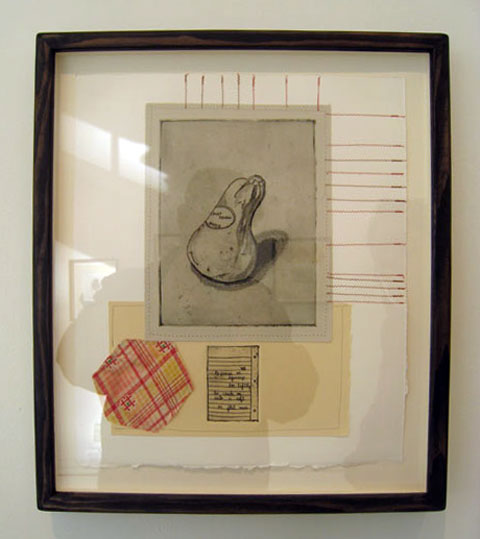
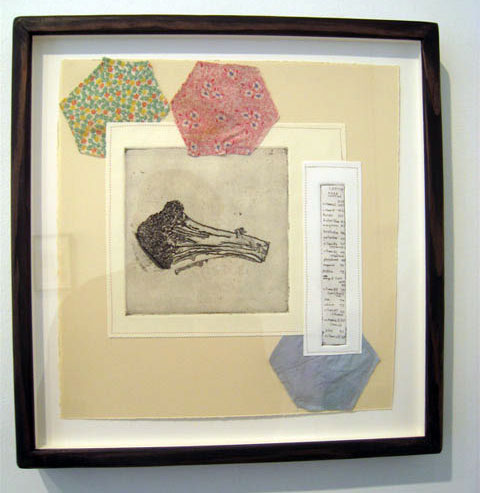
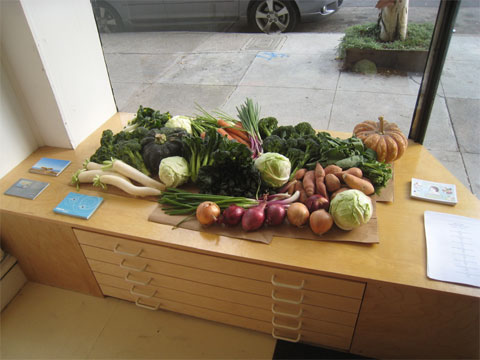
MKC and I hopped around SF yesterday afternoon checking out some nice shows. The good folks at Little Tree were kind enough to let us in before the opening to check the work and snap some pics of Maria Forde's "Fetching Veggie Etchings" show, a tight but playful take on healthy eating.

forde_1.jpg
forde_2.jpg
forde_3.jpg
forde_5.jpg
forde_6.jpg
forde_7.jpg
forde_8.jpg

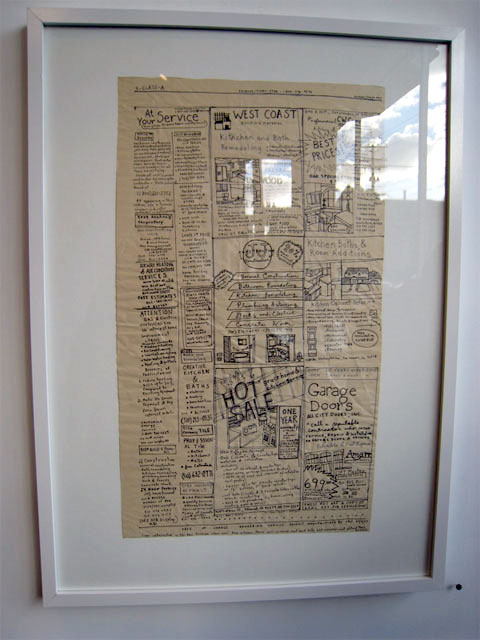
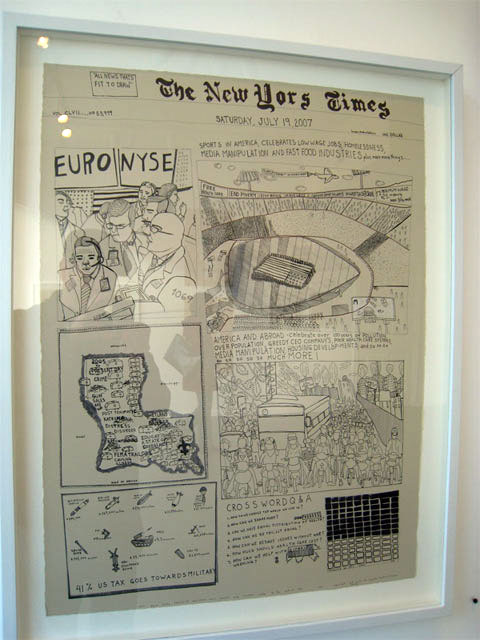
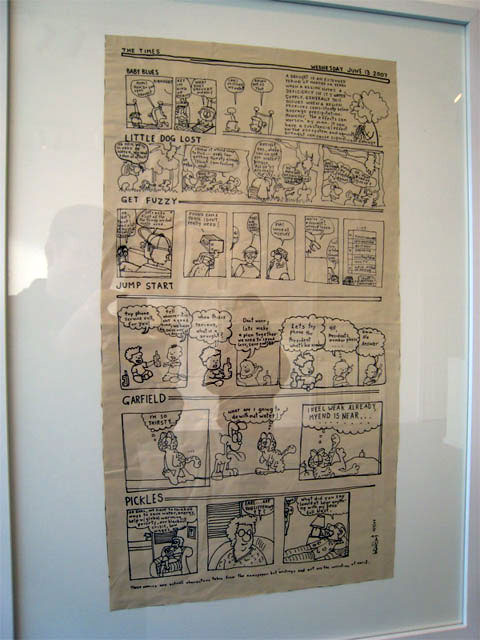
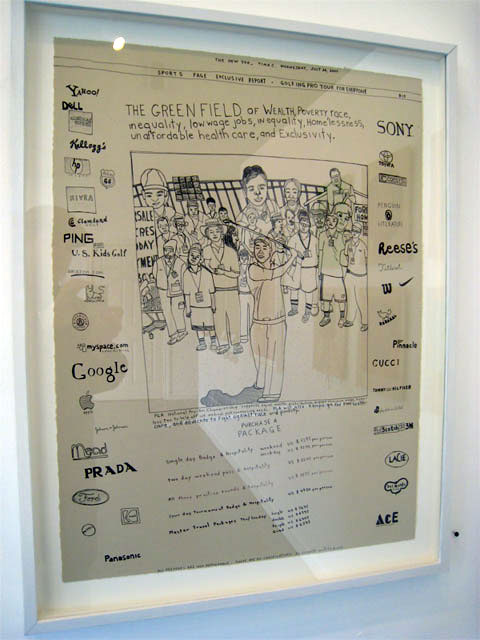
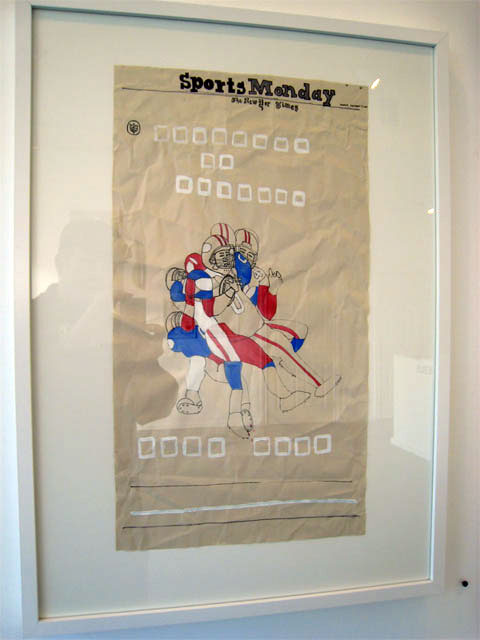
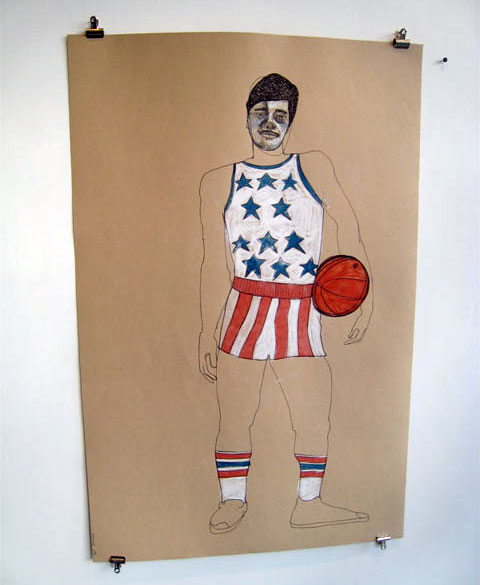
Then we headed over to Eleanor Harwood for Veronica De Jesus' show. I really dig her drawing style. The NY Times page drawings on newsprint are quite clever...

dejesus_6.jpg
dejesus_10.jpg
dejesus_11.jpg
dejesus_15.jpg
dejesus_12.jpgdejesus_9.jpg
dejesus_1.jpg
dejesus_3.jpg
dejesus_4.jpg
dejesus_5.jpg

We finished up at a great group show over at Electric Works (formally Trillium Press). The show is called "Civil Twilight". Here are some highlights...

electric.jpg

jagel.jpg
Jason Jägel

jagel_3.jpg
Jason Jägel

jagel_4.jpg
Jason Jägel

madonna.jpg
Paul Madonna

mcdowell.jpg
Heidi McDowell

mcdowell_2.jpg
Heidi McDowell

somerville.jpg
Travis Somerville

blade_1.jpg
Michelle Blade

blade_3.jpg
Michelle Blade

mazza_4.jpg
Christina Mazza

mazza_2.jpg
Christina Mazza

gueorguieva.jpg
Iva Gueorguieva

maddoch.jpg
Jeremiah Maddock

maddoch_2.jpg
Jeremiah Maddock

rofman_2.jpg
Julie Rofman

car.jpg

Monday, December 3, 2007

Jamie Vasta at Patricia Sweetow Gallery

Hurray! Glitter! Jamie Vasta’s latest series “Mustn’t” is absolutely stunning. Some of the pieces in the show made me experience a funny fluttery feeling inside. Before seeing this show in the flesh, I wouldn’t believe it was possible to make sophisticated, rich, virtuosic paintings in nothing more than craft glitter and wood stains.

The nine paintings on display at the Patricia Sweetow Gallery are fairly large (48” x 60”) works on wood panel. Vasta combines areas of thick glitter application with exposed, stained areas of the wooden supports. The execution of the work is tidy and controlled and it took quite a bit of careful looking to try and figure out how she creates these paintings. My guess is that she begins by projecting and tracing her source photos onto the panels, first stains the areas that will remain raw wood, and then begins filling in the blanks with careful combinations of colored glitter.

This series “Mustn’t” is based on Angela Carter’s feminist fairytale about two sisters who seduce a hunter and lure him into the woods in order to torture and murder him. Vasta uses her own photography as source material for her paintings, staging her actors like stills from a movie. I’m guessing she goes through a great deal of research, planning and sketches before shooting the photographs and creating the paintings. The care and flawless execution put into this show packs a powerful one-two punch. On the one hand you have splendidly executed images, whose richness and complexity of colors and textures dazzles the eye. On the other hand, you experience the pure joy of gratuitous amounts of girly glitter.

Clothed in lacey, flowing dresses, the women depicted in this story are seen at various stages of the narrative. In “As White As Snow” we see a woman shrouded in lace, ghostlike and seductive. The viewer plays the role of the seduced. In “Wil O’ the Wisp” and “The Beseecher”, we see a man, irresistibly drawn into the women’s trap. “Scarcely a Leaf Left on the Tree” is a tender but oddly eerie scene of a woman brushing a man’s hair. We start to realize something is amiss in “Cottontail“ and “Feral”, scenes of a woman skinning a rabbit, and of a woman dressed in animal furs, down on all fours in the forest like a wolf. Finally in “The Knife” and “In the Rushes” we see the women on the verge of stabbing the man to death. He is bound by plastic and gasping for air. The narrative of the story comes through strongly in the paintings and I think is successful in part by the photorealistic illusion of Vasta’s detailed work.

I wasn’t familiar with Angela Carter’s work before seeing this show. I will have to look up some books of hers. From her website I learned she was born in 1940 and had a great passion for classic literature. She spend much of her career rewriting classic fairytales and stories to include a more feminine bent. I’m intrigued and want to know more about her work. I’m thankful to Jamie Vasta for both inspiring me with her work and pointing me to a new writer to explore.

Images from JamieVasta.com

www.jamievasta.com
www.patriciasweetowgallery.com
www.angelacartersite.co.uk

Jamie Vasta – Mustn’t
Patricia Sweetow Gallery
77 Geary, Mezzanine
San Francisco, CA 94108
The show runs from November 1 to December 15th, 2007

Joseph Cornell and Louise Nevelson

Structure, Limits, and Freedom


I finally made it over to the SFMOMA for the Joseph Cornell exhibition. I’ve been a fan of his elaborate, enigmatic boxes since my art student teens (and he was a real working artist from a borough other than Manhattan too!). It was a kick to see so many of them, and alongside the collages, magazine covers, and assorted weird stuff he made.
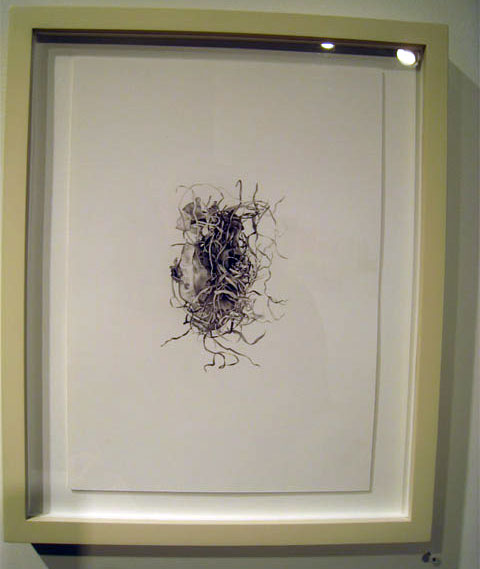
Last month, after I saw the
Louise Nevelson show at the deYoung, I knew I wanted to explore her work in the context of issues raised (for me) by Cornell. I’ve always really liked her work, too, but for very different reasons. Cornell’s work is enigmatic, but in a playful and Surrealist vein; his work by using common objects and collage is so accessible as to be “user friendly.” The word enigmatic also comes to mind when I think of Nevelson’s pieces, but her choice of materials and forms most often convey a sense of austerity and discipline.

The show at the deYoung is large enough that one truly gets a sense of entering Nevelson’s world, so that a range of responses can develop over time to the body of work and themes emerge. Many critics go on at length about her choices to work in monochrome. My friend
Anna Conti had some very interesting thoughts about Nevelson’s sculpture being essentially a form of drawing. We all are drawn to various responses and concepts based on our individual “filters” (though most professional critics would deny that they have personal filters and instead come up with more hifaluting verbiage about theories...).

One of my own filters for art comes from my personal sense of what the creation of art does for me:
it helps me mediate reality. So I look at all these structures Nevelson has built and I see as a unifying structure rectangular grids or boxes that contain enigmatic elements....just like Cornell’s boxes. And I wonder if each of them needed that structure to help make sense of the world.

It could be that the linear structure imposes order on chaos. Both of them, if you read the critics, are dealing with capital-I “Issues”: Nevelson with the Holocaust and social issues, Cornell with various infatuations and interest in nature and in how the world works. A box is both literally and metaphorically a marvelous device to “tame” or control big problems or things that threaten to be overwhelming. Nevelson’s discipline and Cornell’s obsessiveness each in its own way could support this theory.

On the other hand, it could simply be that having the linear structure is a useful starting point for entering into the creative act. Many artists and artisans like the idea of solving a problem or a puzzle, and setting specific parameters is an easy way to do this. One might do a drawing every morning in a 3" x 5" pad, design a series of houses that fit a 25 foot wide lot and touch the houses on either side, or write about life and death using the sonnet form. Once a form is mandated, there is freedom to proceed within it.


I think this is why some of us in the martial arts really get into learning kata. The steps of the kata are the structure. The form is mandated. Once you accept this as a given (and have a certain proficiency), there is freedom to explore endless variations: what happens when my weight shifts from the ball of this foot to this heel before I start to raise my sword? If I exhale while turning my head, do my shoulders do something that affects my stance? Do things change if I conceive of this movement as a pulling rather than as a pushing?

These two exhibits and the martial arts I've studied demonstrate how a good structure can serve as a lifelong learning or creative tool. Chose or build your's well !

(This post was copied from Janet Rosen's Blog, Zanshinart)

Show at Gruenwald Press

Article with photos up at Civic Center:

http://sfciviccenter.blogspot.com/

Sunday, December 2, 2007

Mission Greenbelt at the SF Arts Commission

Mission Greenbelt Headquarters initiates a new SFAC Gallery exhibition series, Winter Workshop, which is designed to support artists engaged in the creation of long-term projects through providing space, administrative support and funding at an intermediary stage of the generative process. After a call for submissions, the staff of the SFAC Gallery chose Amber Hasselbring’s community-based urban earth artwork project, The Mission Greenbelt.

About the Project:
The Mission Greenbelt project will inspire and enable San Franciscans to begin growing an urban earth artwork. The Greenbelt will consist of neighboring native plant sidewalk gardens in front of homes, apartment buildings, storefronts and schools between Franklin Square Park and Dolores Park. In addition to improving the environment and creating a habitat for birds, insects, reptiles and small mammals, the project will unite and strengthen a community.

From November 10 to December 22, 2007 the San Francisco Arts Commission Gallery transforms into Headquarters for the Mission Greenbelt Public Awareness Campaign. Headquarters is the central meeting place for Mission Greenbelt researching and campaigning. Headquarters also hosts a multi-media art installation, free public events and hands-on workshops. Visitors of all ages are invited to visit Headquarters and join in the effort to create a new San Francisco Greenbelt.

There is a Native Plant Demonstration Garden in front of the San Francisco Arts Commission Gallery which is made possible through a partnership with Nature in City’s Education & Stewardship Committee.


http://www.sfacgallery.org/information.fsp
Artist: Amber Hasselbring

The best piece on this is a funny, well written essay with neat photos up at SF Mike’s blog (image from his blog as well - permission granted to link). In fact, if you are interested in music, politics or art in the Civic Center, it's just a great read!

http://sfciviccenter.blogspot.com/2007/11/mission-greenbelt-campaign-headquarters.html